Digital transformation

The silent killer of good plannnig

Lessons that apply across every industry

Whether you’re in travel, retail, law, logistics, or manufacturing – if you’re relying on manual spreadsheets, disconnected systems, or clunky workarounds, you’re not alone.

No matter the sector, finance teams face similar planning hurdles
Disconnected Forecasting & Overworked Finance Teams

One of our clients, NEO Next, faced similar challenges. And while they operate in the North Sea, their journey to transformation has lessons that apply to every industry.

 
NEO’s pain points will likely resonate:

• Forecasting done in Excel = time-consuming,
error-prone
• Data from multiple systems (SAP, EnergySys) not connected
• No clear audit trail or version control

Impossible to scale planning across

The Turning Point:

Oracle EPM + GK’s customised implementation.

Instead of defaulting to a huge tech overhaul, NEO partnered with GK to streamline what they already had using Oracle EPM.

Together, we delivered a planning environment that was:

  •  Integrated across SAP and operational systems
  • Unified for both financial and operational data
  • Scalable for acquisitions and growth
  • Easier to use, with fewer workarounds and better adoption
 
This isn’t just about energy – It’s about finance teams everywhere

We’ve seen the same story unfold across industries:

Retail teams stuck exporting POS + inventory data to Excel
Travel companies struggling with real-time demand planning
Legal and professional services juggling disjointed reporting processes
Manufacturers needing to align supply chain and finance
Finance teams across every sector losing time to version control chaos

Featured content

What is enterprise performance management
The best way to kickstart a digital transformation
LinkedIn
X
Facebook
WhatsApp

Share this post

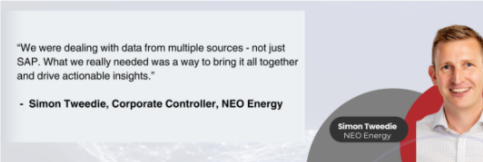
“Implementation partners are essential in helping businesses navigate Oracle EPM. Their expertise is key to making the system work for real-world needs.”

– Simon Tweedie, Corporate Controller at NEO Next

Important Oracle EPM term: Forecast accuracy


Definition: How closely your forecasts match actual outcomes.

Why It Matters: Poor forecast accuracy = poor decisions.

Think of your forecast like the GPS for your business.

If it’s even slightly off course, small errors compound – and suddenly you’re miles from where you should be. We’ve seen companies invest months into planning cycles, only to find that inaccurate assumptions or disconnected data caused major financial surprises.

One client projected a 10% rise in revenue… but actuals came in 7% lower. Why? Forecasts were built on stale sales data, locked in spreadsheets, and missed the shift in market demand.

With Oracle EPM, forecast accuracy becomes measurable and manageable. Real-time integrations with ERP systems like SAP ensure your forecasts reflect what’s actually happening – not what you hope is happening.

Finance leaders must confidently guide the business, adapt plans faster, and build trust at the board level.

Whether your ERP is SAP, NetSuite, or something else – Oracle EPM sits on top of it and unlocks a smarter, more connected way to plan.


GK’s implementation model means:

  • No need for a complete rebuild
  • Focused improvements where it counts
  • Real adoption (no shelfware)
  • Results that resonate with your board
 

Have a question about EPM?


Recommended:

Why most finance teams aren’t AI ready
Simplifying data transfers
Monthly EPM updates schedule change